Setting up a company in Dubai in 2026 means choosing the right jurisdiction, securing a trade license, and meeting corporate tax and VAT obligations from day one. This guide walks you through every stage – from picking a business activity to opening a bank account – using current UAE rules and practical timelines.
To set up a company in Dubai, choose between mainland, free zone, or offshore, define your business activity, reserve a trade name, obtain initial approval, prepare and notarize documents, secure office space, and pay license fees. Most straightforward setups complete within one to two weeks, after which you register for corporate tax and, if required, VAT.
Key Takeaways
- Mainland, free zone, and offshore are the three setup routes. Most now allow 100% foreign ownership, but they differ on where you can trade, visa access, and tax treatment.
- Dubai (DET) and Abu Dhabi (ADDED) follow the same federal ownership rules but run different authorities, fee schedules, and industry ecosystems.
- Corporate tax is generally 9% on taxable profits above AED 375,000, with 0% below that threshold and potential 0% on qualifying free zone income.
- VAT registration is mandatory once taxable supplies plus imports exceed AED 375,000 in 12 months, or are expected to exceed that amount in the next 30 days; voluntary registration starts at AED 187,500.
- Simple setups complete in one to two weeks; bank account opening typically takes a further two to six weeks.
- The biggest mistakes are choosing the wrong jurisdiction, underestimating tax registration deadlines, and weak documentation that fails bank KYC.
Why Dubai is a Popular Place to Setup a Company in 2026
Dubai remains one of the most attractive places to start a business because of three structural advantages: foreign ownership, a competitive tax regime, and fast setup. Following reforms to the UAE Commercial Companies Law and subsequent Cabinet decisions, 100% foreign ownership is now permitted for most mainland activities – no mandatory Emirati shareholder for the majority of commercial, industrial, and professional businesses.
On tax, the UAE’s standard corporate tax rate is 9%, with the first AED 375,000 of taxable profit taxed at 0%, and qualifying free zone income potentially taxed at 0% under the Qualifying Free Zone Person (QFZP) rules. Compared with the headline corporate tax rates in many home countries of European, US, and Indian founders, this remains highly competitive for regional headquarters and holding structures.
Speed is the third draw. Mainland and free zone entities can often be established within one to two weeks for straightforward activities, with many free zones promoting fast-track setups. Combined with Dubai’s role as an international air, trade, and logistics hub, this makes it a practical base for consulting, IT and SaaS, ecommerce, and trading businesses.
Mainland vs Free Zone vs Offshore Company Setup in Dubai
The single most important decision is your jurisdiction, because it dictates where you can trade, whether you can sponsor visas, and how you are taxed. Here is how the three routes compare in 2026.
| Aspect | Mainland | Free zone | Offshore |
| Authority | Dubai DET | Individual free zone (DMCC, IFZA, Meydan, etc.) | Offshore registrar (JAFZA Offshore, RAK ICC) |
| Ownership | Up to 100% foreign (most activities) | 100% foreign | 100% foreign |
| Where you can trade | Anywhere in UAE and abroad; can bid for government contracts | Inside the zone and internationally; mainland trade needs a distributor or mainland branch | No direct UAE onshore trading; holding and international structuring only |
| Visas | Yes, quota linked to office size | Yes, quota linked to facility | Usually none |
| Corporate tax | 9% above AED 375,000 | 9% on non-qualifying income; 0% on qualifying income (QFZP) | Can fall outside UAE CT scope in some cases; needs bespoke planning |
Mainland suits businesses serving UAE customers directly – local trading, retail, services to residents, and government contracts. The most common structure is the LLC, with sole establishments and civil companies used for professional services and branches available for foreign companies. Regulated activities (healthcare, education, financial services, real estate brokerage) need additional approvals from sector regulators before licensing, and a physical office with an Ejari tenancy registration is normally required.
Free zones are 100% foreign-owned by default and are ideal for consulting, software and SaaS, digital services, ecommerce targeting customers outside the UAE, media, and logistics. The key limitation: a free zone company generally cannot trade directly with mainland customers without appointing a mainland distributor or setting up a mainland branch or dual license.
Offshore companies (JAFZA Offshore, RAK ICC) are non-resident vehicles used for holding shares, IP, vessels, and international trading not focused on UAE onshore customers. They cannot sponsor UAE work visas through the offshore entity itself and are not suitable for retail or B2C activity inside the UAE.
Dubai vs Abu Dhabi Company Setup: Which Location Fits Your Business
Both emirates implement the same federal Commercial Companies Law, so 100% foreign ownership applies to most mainland activities in both Dubai and Abu Dhabi, subject to each emirate’s negative list of strategic sectors. The available structures – LLCs, sole establishments, civil companies, branches, free zone entities, and offshore vehicles – are broadly the same.
The differences are in the authority, fees, and ecosystem. Dubai mainland companies are licensed by the Department of Economy and Tourism (DET), while Abu Dhabi uses the Abu Dhabi Department of Economic Development (ADDED). Each publishes its own activity lists and fee schedules.
In practice, the choice usually comes down to ecosystem fit:
- Dubai is strong for trade, tourism, tech, media, logistics, ecommerce, and consulting, with a deep free zone ecosystem (DMCC, IFZA, DAFZA, DIFC). It is often chosen for international marketing appeal.
- Abu Dhabi leans toward energy, industrial, R&D, defense, and financial services, with Abu Dhabi Global Market (ADGM) as a key international financial center.
The rule of thumb: same federal ownership rules, different ecosystems and authorities. Choose based on your industry and where your customers and partners are located.
Step-By-Step Process to Set up a Company in Dubai
The core sequence is consistent, though the exact steps differ between mainland and each free zone.
Mainland LLC process (Dubai DET)
- Define your business activity and structure. Decide what you’ll do and choose a legal form (LLC, sole establishment, civil company, or branch). Confirm the activity is eligible for 100% foreign ownership and check whether any regulator approvals apply.
- Choose and reserve a trade name. Submit one or more compliant names to DET for trade name reservation.
- Obtain initial approval. Submit the application form, shareholder and manager passport copies, and activity details. DET issues initial approval, confirming you may proceed – this is not yet a license.
- Prepare constitutional documents. Draft and notarize the Memorandum of Association. If corporate shareholders are involved, board resolutions, powers of attorney, and corporate documents must be notarized and legalized.
- Secure office space and Ejari. Rent an office or flexi-desk meeting your activity and visa needs, then register the tenancy with Ejari.
- Obtain external approvals if required. Regulated activities need a no-objection or approval from the competent authority before the license is issued.
- Submit the final application and pay fees. Provide the MOA, Ejari, external approvals, passport copies, and photos, then pay the license and registration fees.
- Receive your trade license. You can then apply for an establishment card, residence visas, and register for corporate tax and, if required, VAT.
Free zone process (Dubai)
- Choose a free zone and activity aligned to your business, then determine license type (trading, professional, industrial) and facility type (flexi-desk, office, warehouse).
- Submit the initial approval application with the initial approval form, business plan, and passport copies. Corporate shareholders may need a current license, bank reference, or audited financials.
- Receive initial approval after the authority reviews activity and shareholders and completes KYC.
- Prepare incorporation documents, including the registration application, board resolution, power of attorney, MOA/AOA, specimen signature, and passport photo – notarized and certified as required.
- Sign the lease and facility agreement for your office or flexi-desk.
- Pay registration and license fees, which vary by zone and license type.
- Receive your free zone license, certificate of incorporation, share certificates, and MOA/AOA. Then apply for visas, open a bank account, and register for corporate tax and, if applicable, VAT.
Required documents, Approvals, and Trade Name Reservation
Mainland and free zone requirements are similar in principle, though formats differ.
For individual shareholders, you’ll typically need a color passport copy for each shareholder and the appointed manager, a passport-size photo (white background) of the manager, specimen signatures, and – in some zones – a CV and bank reference letter. If a shareholder already holds UAE residence, a no-objection letter (NOC) from the current sponsor is usually required.
For corporate shareholders, prepare the certificate of incorporation, a board resolution approving the investment and appointing the manager, a power of attorney, the corporate shareholder’s MOA/AOA, and often two years of audited financials or a bank reference. For mainland LLCs, add the locally notarized MOA and the Ejari tenancy contract with a location map.
Approvals
- Initial approval from DET or the free zone authority (basic KYC and activity clearance).
- Sector regulator approvals for regulated activities – Dubai Health Authority for medical, KHDA for education, the Central Bank/SCA/DFSA/FSRA for financial services, and the relevant regulators for legal, engineering, recruitment, and real estate.
Trade name rules
Your trade name must be unique and not misleadingly similar to an existing one, must not contradict public morals or order, and cannot reference religious names, political organizations, or ruling families without approval. Legal suffixes such as “LLC”, “FZ-LLC”, or “Ltd” are required, and using “UAE”, “Emirates”, or emirate names may need special approval. Do not print branding until the name is formally reserved.
Notarization and Attestation
Foreign corporate documents – certificates of incorporation, board resolutions, MOA/AOA, and POAs – generally must be notarized in the home country, legalized by the UAE embassy or consulate there, and then attested by the UAE Ministry of Foreign Affairs on arrival. Some free zones accept documents via approved corporate service providers, but the legalization chain still applies unless exempted by treaty.
Office Space, Visa Eligibility, and Operational Requirements
Office and visa rules vary by emirate and free zone, so it helps to understand the principles rather than fixed numbers.
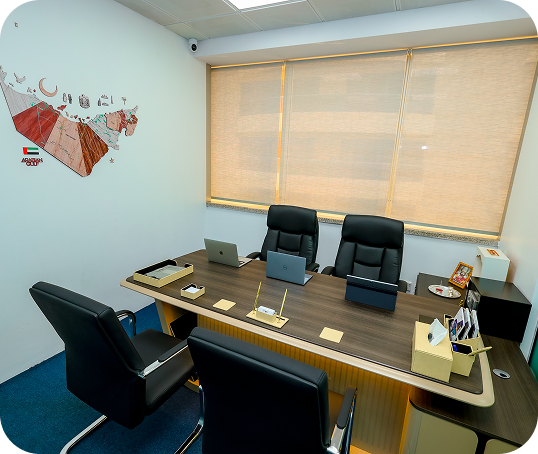
On the mainland, most activities require a physical office and Ejari; fully virtual licenses are rare for full-scope operations. An office becomes mandatory when you need to issue visas. In free zones, you can usually choose a flexi-desk or shared office, a dedicated office, or a warehouse. For many startup-oriented zones, a flexi-desk is enough to obtain a license and a small number of visas, while industrial and logistics activities need warehouse or industrial units.
Visa quotas are tied to facility type and size. On the mainland, the number of visas is linked to office size and activity, with more visas available as you increase office space. In free zones, packages typically state a maximum number of visas – a flexi-desk might support a small number, with larger offices and warehouses supporting more. Always confirm current quotas with the chosen zone or DET, since these are set by each authority and immigration.
Costs, Timelines, VAT, and Corporate Tax Considerations
Government fees vary by activity and free zone and are not fixed nationwide, so treat the figures below as market ranges rather than official tariffs.
Setup costs and Timelines
- Dubai mainland (DET): Government fees for trade name, initial approval, and license issuance commonly total from roughly AED 10,000 upward, plus office rent, Ejari registration, immigration and labour card fees, and per-person visa costs.
- Dubai free zones: Starter packages (service or consulting, flexi-desk, one to three activities) often start from around AED 8,000–15,000+ per year in lower-cost zones, while premium zones such as DMCC or DIFC can be significantly higher, especially for regulated activities.
- Visas: Per-visa costs typically run into several thousand dirhams, combining the entry permit, status change, medical test, Emirates ID, and related processing fees.
On timelines, a clean mainland file with standard activities usually sees trade name and initial approval in one to three working days, MOA notarization and Ejari within a few days, and the final license within one to two weeks. Many free zones offer fast-track setups, with initial approval in one to five working days and license issuance often within three to ten working days. Regulated activities or complex shareholding extend these timelines.
Corporate Tax
The UAE corporate tax regime applies to both mainland and free zone companies. The standard rate is 9% on taxable profits above AED 375,000, with profits up to that threshold taxed at 0%. Most juridical persons established in the UAE must register for corporate tax even if income is low, obtaining a Corporate Tax Registration Number within a specified period from incorporation.
Free zone companies are within the scope of corporate tax but can benefit from 0% on qualifying income if they qualify as a Qualifying Free Zone Person. This requires maintaining adequate substance, deriving qualifying income, meeting the de-minimis conditions on non-qualifying income, and not electing to be taxed at 9%. These benefits are not automatic – they depend on correct structuring and documented substance.
Smaller businesses may also qualify for Small Business Relief, which allows companies with revenue of AED 3 million or less to elect zero taxable income for the period, available for tax periods ending on or before 31 December 2026. This relief must be actively elected through the FTA’s EmaraTax portal and is not automatic, and it is not available to Qualifying Free Zone Persons already claiming 0% on qualifying income.
Non-qualifying income is taxed at 9%.
VAT
VAT registration is mandatory once taxable supplies plus imports exceed AED 375,000 in the last 12 months, or are expected to exceed AED 375,000 in the next 30 days. Voluntary registration is available once taxable supplies or expenses exceed AED 187,500. Registration is done through the FTA e-services portal. VAT-registered businesses charge 5% on taxable supplies, file returns (typically quarterly for SMEs), and maintain proper tax invoices and records. Many founders under-register or delay, which leads to penalties.
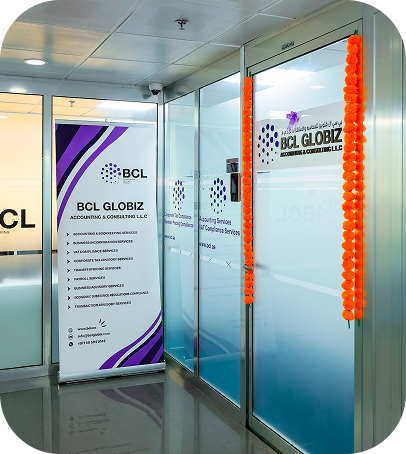
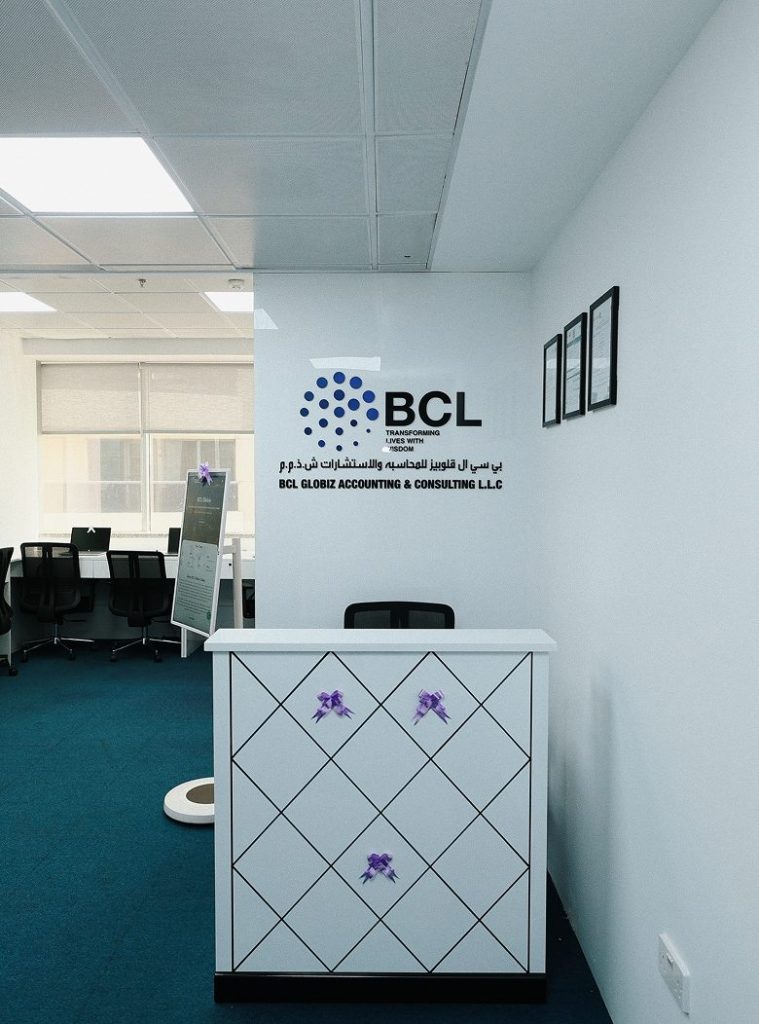
This is where professional support pays off. BCL Globiz is a Dubai-based accounting, tax, and business advisory firm that supports clients on accounting, VAT, corporate tax, transfer pricing and compliance – including setting up the chart of accounts and invoice templates a new company needs from year one. The firm frequently supports European clients, especially from Spain and Italy, with UAE company structuring.
Opening a Business Bank Account in Dubai
Bank account opening is driven by UAE Central Bank regulations and each bank’s internal AML and KYC policies, and it is often the slowest part of setup. Most banks request your company documents (trade license, MOA/AOA, share certificates, certificate of incorporation, board resolution authorizing the account), personal documents for shareholders and signatories, proof of address, and detailed KYC including a business description, projected turnover, customer and supplier geographies, and source of funds.
Initial review commonly takes two to six weeksfor straightforward cases, longer for complex structures or higher-risk industries. The most common rejection reasons are insufficient business substance in the UAE, a vague business explanation, shareholders from high-risk jurisdictions, undocumented ownership chains, and a mismatch between the licensed activity and the actual banking activity. To improve approval odds, prepare a clear written business profile, keep your license activity, website, and pitch consistent, and consider an advisor who can pre-screen your structure.

Common Mistakes, FAQs, and Next steps
The most frequent and costly errors founders make include:
- Choosing the wrong jurisdiction – for example, a SaaS business with mostly UAE clients picking a free zone that doesn’t allow easy mainland access, then paying for a dual license later.
- Underestimating tax – assuming the UAE is “tax-free” and missing mandatory corporate tax or VAT registration deadlines.
- Ignoring substance and banking requirements – choosing minimal flexi-desk or offshore setups with no real operations, then failing bank KYC.
- Misaligning activity descriptions – a license that says “management consultancy” while the company actually trades goods.
- Weak documentation and legalization – missing or improperly legalized foreign corporate documents.

- No planning for visas and staffing – choosing packages that don’t support the visa quota you need.
Before proceeding, verify your exact activity code and its foreign-ownership eligibility, whether your customers are mainly in the UAE or abroad, the current fee schedule and visa quotas for your chosen jurisdiction, your corporate tax and VAT obligations from year one, and whether your structure and nationality mix match what UAE banks currently accept. A firm like BCL Globiz can stress-test your plan against corporate tax, VAT, banking, and substance requirements before you spend on licenses. Speak to BCL Globiz about your Dubai company setup for free consultation and no commitment needed.
Frequently Asked Questions
How much does company setup in Dubai cost in 2026?
Costs vary by jurisdiction and activity. Dubai mainland government fees commonly start from around AED 10,000 plus office rent and visa costs, while free zone starter packages often range from AED 8,000–15,000+ per year in lower-cost zones. Premium zones cost significantly more. These are market ranges, not fixed official tariffs.
Can foreigners own 100% of a Dubai company?
Yes. Following reforms to the UAE Commercial Companies Law, 100% foreign ownership is now allowed for most mainland activities, and free zone and offshore companies are 100% foreign-owned by default. A limited negative list of strategic sectors may still require UAE-national participation.
Should I choose a mainland or free zone setup in Dubai?
Choose based on where your customers are. Mainland is best if you serve UAE customers, retail, or government contracts directly. A free zone suits consulting, SaaS, ecommerce, or media aimed at international or in-zone clients. Free zone companies need a distributor or mainland branch to trade directly with mainland customers.
How long does it take to set up a company in Dubai?
For straightforward activities, mainland setups typically complete within one to two weeks, and many free zones offer fast-track licenses within three to ten working days. Regulated activities or complex corporate shareholding can extend timelines, and bank account opening adds a further two to six weeks.
Do I need a physical office to start a company in Dubai?
On the mainland, most activities require a physical office with an Ejari tenancy, especially once you need to issue visas. In free zones, a flexi-desk or shared office is often enough for a license and a small number of visas, while industrial activities need warehouse or industrial units.
Is company formation in Abu Dhabi different from Dubai?
The federal ownership rules are the same – 100% foreign ownership for most mainland activities in both emirates. The differences are the authority (ADDED in Abu Dhabi, DET in Dubai), separate fee schedules, and ecosystem focus: Dubai leans toward trade, tech, and media, while Abu Dhabi is stronger in energy, industry, and finance