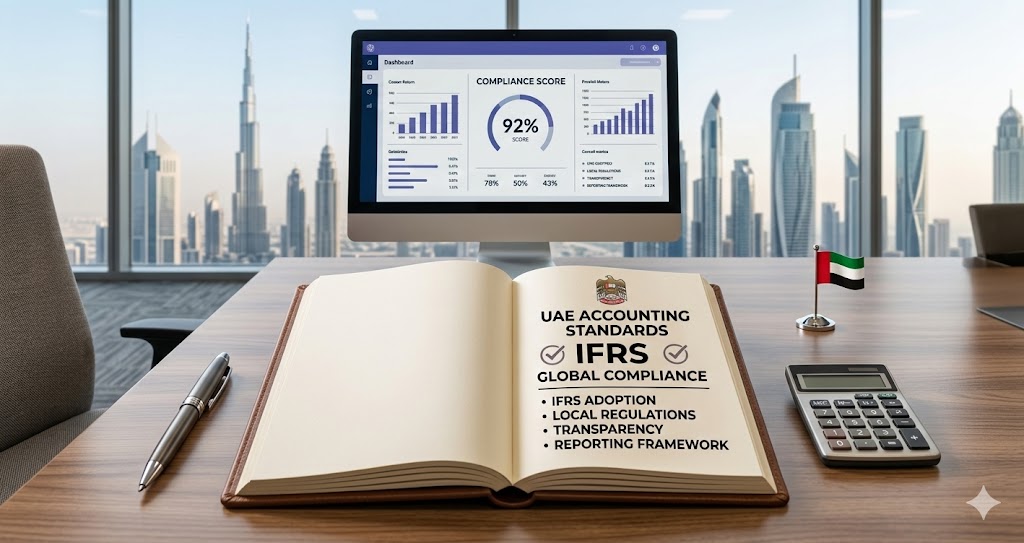



Why IFRS Matters for UAE Businesses (and why the right advisor saves you time)
IFRS isn’t just an accounting checklist. In the UAE, it’s the language investors, banks, and regulators expect. Get it right and your numbers are clear, comparable, and credible. Get it wrong and you’re stuck in rework, audit queries, and delayed decisions. The good news: with the right advisory partner, IFRS adoption and ongoing compliance become a steady rhythm instead of a fire drill.
What an IFRS advisor actually does
Think technical accounting, policy design, and hands-on support rolled into one. A strong team helps you interpret standards, document judgments, align your ERP/chart of accounts, prepare disclosures, and train finance staff. They’ll also connect IFRS with local realities like corporate tax, transfer pricing impacts, and reporting calendars—so your statements are compliant and useful.
Trusted IFRS advisors in the UAE
Deloitte
Deep bench strength and sector specialists. Deloitte supports first-time adoption, complex areas (IFRS 16, 9, 15), carve-outs, IPO readiness, and disclosure upgrades. Their playbook is tight, which helps when timelines are not.
PwC
Known for pragmatic guidance and strong industry coverage. PwC pairs technical memos with workable templates, so finance teams can move from policy to numbers quickly—especially helpful in multi-entity groups.
KPMG
Client-centric and detail-oriented. KPMG’s IFRS teams are strong on judgments (impairment, revenue, credit loss models) and will pressure-test assumptions, not just format the note.
EY
Good fit for companies needing horizon scanning. EY tracks upcoming standard changes and helps you plan early, from impact assessment through to disclosures and auditor readiness.
BCL Globiz
A nimble, UAE-focused option for companies that want hands-on support. BCL Globiz blends technical accounting with process fixes: policy packs, disclosure checklists, close calendars, and training. They’re particularly useful for mid-market groups needing IFRS help that fits the month-end close—without bloating the workload.
How to pick the right firm (quick filter that works)
- Match by industry. Manufacturing, fintech, real estate, healthcare—each has IFRS hot spots. Choose a team that’s seen your issues before.
- Ask for deliverables. Policies, memos, models, disclosure checklists, training—get them in writing.
- Check integration. Can they link IFRS conclusions to your ERP, tax model, and consolidation? If not, you’ll be left stitching it together.
- Timing and support. You want help before, during, and after close—especially the first two cycles.
IFRS and UAE corporate tax: don’t treat them separately
Accounting policies drive taxable results and disclosures influence documentation. Revenue timing, impairment, lease capitalization, and provisions all ripple into your tax position. If you haven’t already, align your IFRS policies with your UAE corporate tax approach early—it saves rewrites later.
Make your next close easier (small moves, big wins)
Tighten your accounting manual, cut duplicate spreadsheets, standardize disclosures, and run a pre-close checklist two weeks before month-end. A good advisor will leave you with tools your finance team can run without constant hand-holding.
If you’d like practical IFRS support—policy drafting, disclosure upgrades, or first-time adoption—email info@bclglobiz.com. We’ll review your current pack, flag the high-impact fixes, and map a plan that fits your close cycle.