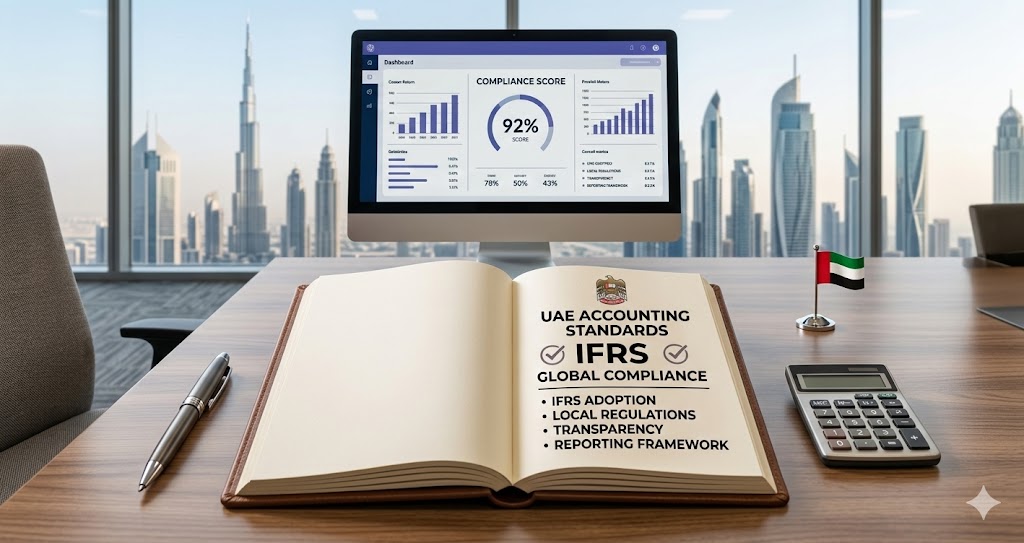


As the UAE transitions into a formal corporate tax regime under Federal Decree-Law No. 47 of 2022, the approach to related party (RP)/payments to connected persons (CP) transactions has become significantly more structured and scrutinized. Benchmarking is a key pillar in UAE transfer pricing regulations, especially when combined with benchmarking analysis for UAE transfer pricing. A key expectation emerging from this shift is the requirement for benchmarking reports—both from auditors and the Federal Tax Authority (FTA).
What was once viewed as a best practice is now seen as a critical compliance tool. In fact, auditors are increasingly requiring benchmarking reports to sign off financial statements, especially where significant transactions with related parties or connected persons are involved.
Make Transfer Pricing a flawless green light show
Auditors are intensifying their focus on related party transactions. Don’t just hope for the best – prepare for the worst. Companies must have readily available, robust transfer pricing documentation and analysis that unequivocally proves all related party transactions were conducted at arm’s length, as if between independent entities. When auditors arrive to verify authenticity, your company should be fully equipped to demonstrate clear, undeniable compliance with arm’s length principles, eliminating any room for doubt or challenge.
This comprehensive transfer pricing documentation is not just a regulatory formality; it’s your company’s frontline defence. It provides a clear, auditable trail of how arm’s length pricing was determined, demonstrating due diligence and minimizing potential tax disputes. Think of it as your fire-resistant suit, ensuring you emerge unscathed from the auditor’s scrutiny.
The Theoretical Basis: Arm’s Length Principle (ALP)
The cornerstone of UAE’s transfer pricing regime is the arm’s length principle, aligned with OECD guidelines. Under this principle, the terms and conditions of transactions between related parties and payments made to connected persons must be consistent with those that would be agreed upon between independent entities in comparable circumstances.
Auditors and tax authorities alike are now applying this principle across a broad spectrum of transactions. This includes not just traditional TP areas like cross-border services or royalties, but also domestic transactions, such as salaries to shareholder-directors, intra-group loans, and shared services.
Why Benchmarking is No Longer Optional
Benchmarking reports serve as independent, third-party validation that a transaction complies with the arm’s length standard.
Here’s why benchmarking is non-negotiable:
- Accounting Finalisation Depends on It – Especially for Connected Persons and Related Party Transactions: If remuneration to connected persons (like directors or KMPs) is not benchmarked to an arm’s length standard, accounting entries for employee benefits may be challenged and left unresolved.
- Auditors Require It to Sign Off: Auditors are increasingly flagging the absence of benchmarking for key intercompany transactions and connected person payments as a limitation or even a qualification point. They need reliable third-party data to support disclosures and avoid exposure.
- Corporate Tax Filing Risks: Without benchmarking, companies risk under- or over-reporting income or expenses, which can result in tax adjustments, penalties, or worse, tax audits.
For example:
- If a connected person’s salary is excessive compared to market standards, the deduction may be disallowed.
- If related party transactions are not aligned with market value, profits may be re-allocated, triggering additional tax liabilities.
- Compliance Across Functions: Benchmarking underpins financial reporting (accounting), audit readiness (assurance), and tax compliance. A gap in one affects the integrity of the others.
Proper documentation such as KMP and local file reports support the accuracy of a benchmarking report UAE.
Keep an eye for transactions with Connected Persons
Benchmarking transactions with connected persons—such as directors, partners, KMPs, officers and their relatives—is especially critical in the UAE, where no personal income tax increases the risk of profit shifting through inflated salaries or benefits. Under Article 28 of the Corporate Tax Law, such payments are only deductible if they reflect market value and are incurred wholly and exclusively for business purposes. Without proper benchmarking, these payments may be recharacterized as disguised profit distributions, leading to disallowed deductions, tax adjustments, and potential penalties. A robust benchmarking study ensures transparency, supports deductibility, and safeguards against regulatory challenges—turning risk into compliance readiness.
FTA Doesn’t Guess—Neither Should You!!
Failure to produce adequate benchmarking can expose businesses to:
- Disallowed tax deductions for non-arm’s length payments: Under Article 25 of the UAE Corporate Tax Law, expenses not incurred wholly and exclusively for business purposes—such as excessive payments to related or connected persons—may be denied as deductions, increasing taxable income.
- FTA scrutiny and adjustments to taxable income: The FTA may review related party transactions and revise income figures if pricing is not supported by arm’s length evidence.
- Penalties and interest on underpaid tax: Failure to apply proper TP standards can lead to back taxes, interest, and financial penalties imposed by the FTA.
- Audit delays or qualified opinions, impacting investor confidence: Missing benchmarking reports can delay audit sign-offs or result in qualifications, eroding the trust of shareholders and lenders.
- Reputational damage and strained stakeholder relationships: Non-compliance with TP rules may signal weak governance and transparency, affecting credibility with regulators, investors, and partners.
Key Considerations for Businesses
To comply effectively with both audit and transfer pricing (TP) requirements, businesses must first identify all material transactions involving related parties and connected persons. They should then assess whether appropriate benchmarking support is already in place or needs to be prepared. Benchmarking reports should be reviewed and updated annually, or whenever there is a significant change in the transaction terms. Engaging TP advisors early—particularly for complex or cross-border arrangements—can help ensure that documentation is accurate, defensible, and aligned with current regulatory expectations.
Conclusion: Benchmarking as the First Line of Defence
To perform benchmarking effectively, businesses must first identify their related parties in UAE transfer pricing.
In the current UAE regulatory and audit environment, benchmarking is no longer a compliance formality—it’s a necessity. It provides the empirical evidence needed to:
- Finalize financial audits without qualification
- Satisfy the FTA’s expectations during a TP review
- Maintain transparent, defensible disclosures in financial statements
Whether it’s a salary to a shareholder, a management fee from HQ, or a loan to a group entity, each transaction involving related parties must now be benchmarked, documented, and ready to withstand scrutiny.
Lead with evidence, not assumptions. A benchmarking report is no longer just good practice—it’s your ticket to clean audits and compliant tax filings.